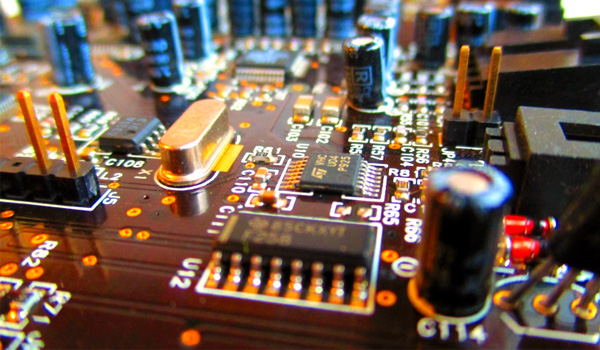
The world of electronic components is constantly evolving, with new technologies emerging one after another. In the pursuit of high-precision and user-friendly electronic devices, surface-mount electronic components have gradually come into the public eye.
SMT stands for Surface Mount Technology, and it is currently the most cutting-edge technology and manufacturing process in the electronic component assembly industry. SMT refers to a series of manufacturing processes carried out on a PCB. PCB (Printed Circuit Board) refers to a printed circuit board.
Process:
Key components of the SMT manufacturing process: Solder paste printing; Component placement; Reflow curing; Reflow soldering; AOI (Automated Optical Inspection); Repair; Depanelling; Board grinding; Board cleaning.
1. Solder paste printing: This process involves applying solder paste to the pads on the PCB, preparing the surface for the soldering of electronic components. The equipment commonly used is a screen printer, located at the very front of the SMT production line.
2. Component Placement: This process involves the precise placement of surface-mount electronic components onto specific locations on the PCB. The commonly used equipment is a placement machine, situated behind the screen printer on the SMT production line.
3. Reflow Soldering: This process melts the solder paste, thereby firmly bonding the surface-mount electronic components to the PCB. The equipment commonly used is a reflow oven, situated behind the pick-and-place machine on the SMT production line.
4. Reflow Soldering: This process melts the solder paste, firmly bonding the surface-mounted electronic components to the PCB. The equipment commonly used is a reflow oven, situated behind the pick-and-place machine on the SMT production line.
5. AOI (Automated Optical Inspection): Its function is to inspect the soldering quality and assembly quality of the assembled PCBs. The commonly used equipment is the Automated Optical Inspection (AOI) machine; this is typically employed for orders of around 10,000 units or more, whilst smaller orders are inspected manually. The specific location depends on inspection requirements and can be positioned at a suitable point along the production line. Some are placed before reflow soldering, whilst others are placed after.
6. Repair: This stage involves repairing PCBs found to have faults during inspection. Common tools include soldering irons and repair workstations. This station is typically situated after the AOI inspection.
7. Panel Cutting: This process involves cutting multi-panel PCBA assemblies to separate them into individual units, usually employing V-cut or mechanical cutting methods.
8. Board Sanding: This process involves sanding areas with burrs to make the surface smoother and flatter.
9. Board Cleaning: This process removes harmful soldering residues, such as flux, from the assembled PCBs. It can be carried out manually or using cleaning equipment; the specific location is flexible and may be either in-line or off-line.
Advantages of SMT assembly:
High assembly density, compact size and light weight of electronic devices.
High reliability and strong shock resistance. Low solder joint defect rate.
Excellent high-frequency performance. Reduced electromagnetic and radio frequency interference.
Facilitates automation, enhancing productivity. Cost savings of 30%–50%. Reduces consumption of raw materials, energy, equipment, manpower and time.
 13631526702
 13726516513